Quick Answer
Who is liable if you get into a car accident with a new car in Florida? New car accident liability in Florida depends on when the crash happened relative to the sale and who was driving. Before you take ownership, dealership coverage may apply, though the customer's own insurance and the circumstances of the crash also affect which policy responds.
After you drive off the lot, your own Personal Injury Protection (PIP) benefits generally apply regardless of fault, and a separate liability claim against another driver may recover additional damages if statutory requirements are met.
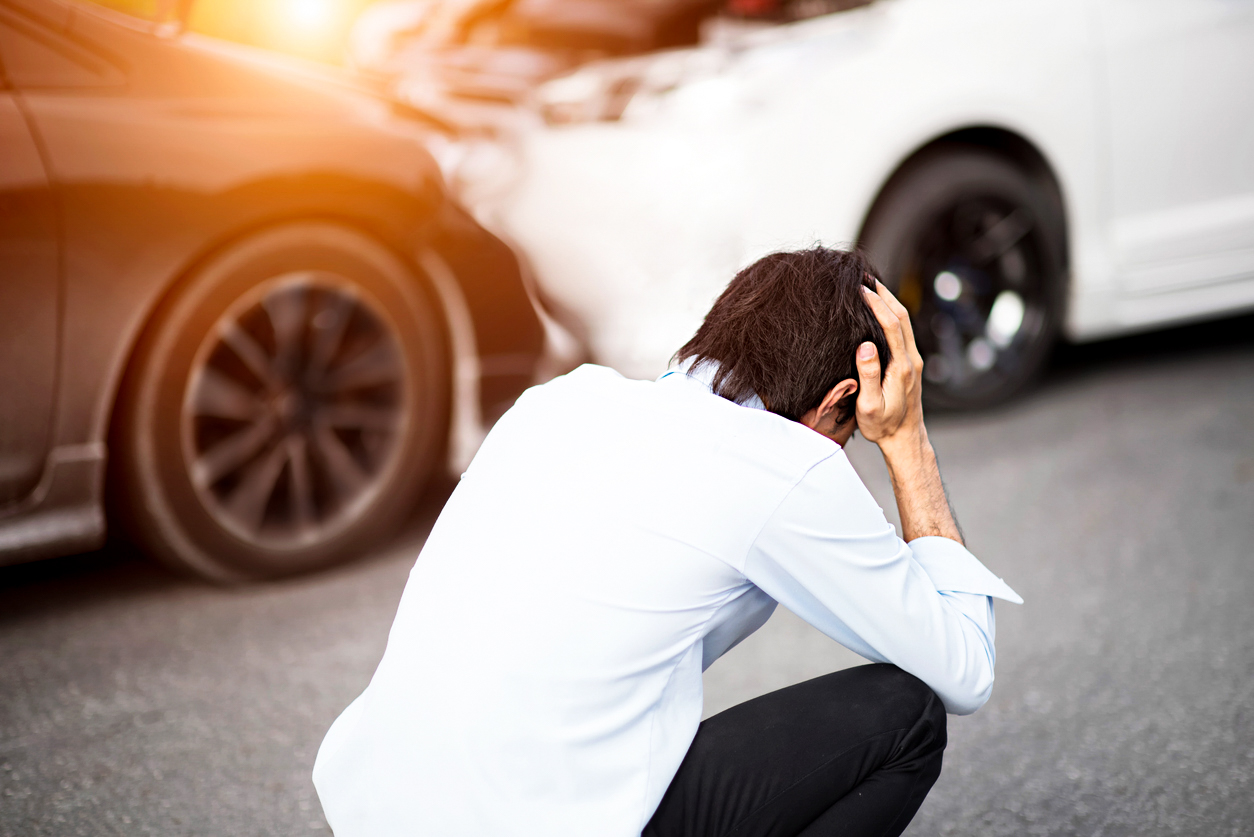
You bought the car an hour ago. The paperwork is still in the folder on the passenger seat, the temporary tag is zip-tied to the bumper, and now you're standing on the curb, looking at a crumpled front end.
What was supposed to be a celebration turned into a coverage question you never expected to be asking.
New car accident liability in Florida turns on timing, ownership, and whether the dealership or manufacturer contributed to what happened. Sometimes the answer is simple.
A standard third-party bodily injury and property damage claim against another driver handles the situation the same way any regular crash would. Other times, three or four different sources of recovery are in play, and figuring out which ones actually apply takes real digging.
SCHEDULE A CONSULTATIONKey Takeaways About New Car Accident Liability in Florida
- Florida does not mandate a specific insurance grace period after buying a new vehicle.
- Many auto policies provide temporary or automatic coverage for a newly acquired vehicle, though the notification period and available coverages depend on the policy.
- Florida PIP benefits generally apply regardless of fault, subject to statutory conditions including a 14-day treatment requirement and limits tied to whether the injury is an emergency medical condition.
- Dealerships may share liability when negligent pre-delivery inspection or employee conduct contributed to the crash.
- Florida's two-year statute of limitations applies to negligence-based personal injury claims arising on or after March 24, 2023, though product liability claims may follow different accrual rules.
Who Is Liable in an Accident Right After Buying a New Car?
Liability in an accident right after a new car purchase depends on who caused the crash, when it happened in relation to the sale, and whether any party other than the driver contributed.
Straightforward cases involve one at-fault driver and one insurance policy. Complicated cases pull in the dealership, the manufacturer, and multiple sources of coverage.
If Another Driver Caused the Crash
A new car buyer injured by another driver in Florida typically pursues two separate types of recovery: first-party PIP benefits under their own policy, and a third-party liability claim against the at-fault driver. The two work differently and reach different categories of damages.
Under Florida Statute § 627.736, PIP benefits apply regardless of fault when the injured person qualifies under a Florida auto policy. Treatment must begin within 14 days of the crash.
PIP generally pays 80% of qualifying medical expenses and 60% of lost wages. Medical benefits may reach $10,000 when the claimant has an emergency medical condition as defined by the statute, and are limited to $2,500 when they do not.
A separate liability claim against the at-fault driver may recover damages beyond what PIP covers. That claim depends on the at-fault driver actually carrying Bodily Injury Liability (BIL) insurance, which Florida does not require most drivers to purchase.
When the at-fault driver has no BIL coverage or not enough, Uninsured/Underinsured Motorist (UM/UIM) coverage on the injured person's policy may fill the gap.
Florida also requires the injured person to satisfy the serious injury threshold under Florida Statute § 627.737 to recover noneconomic damages such as pain and suffering from the at-fault driver.
Meeting the threshold requires a permanent injury within a reasonable degree of medical probability, significant and permanent loss of an important bodily function, significant and permanent scarring or disfigurement, or death.
If a Vehicle Defect Caused the Crash
Product liability may apply when a mechanical or design defect caused the crash. Manufacturers may face claims for defects in the vehicle itself, and dealerships may face negligence claims for failing to inspect or prepare the vehicle before delivery.
Common defect situations that may support both types of claims include the following.
- Brake system failures shortly after taking delivery
- Steering or suspension malfunctions during the initial drive
- Airbag failure on impact
- Tire blowout caused by a manufacturing defect
- Transmission or powertrain failure leading to loss of control
Preserving the vehicle in its post-crash condition matters more than most owners realize. Insurance adjusters, manufacturers, and dealerships all move quickly to repair, replace, or take back damaged vehicles, sometimes before the evidence can be documented.
If the Dealership Contributed to the Crash
Dealerships may share liability when their conduct or their vehicle's condition contributed to the crash. Several scenarios can trigger dealer liability under Florida law.
- Negligent pre-delivery inspection that missed a safety-critical defect
- A dealership employee driving a demonstrator or test vehicle at the time of the crash
- Selling a vehicle in a known unsafe condition without disclosure
- Providing improper instructions during a test drive
- Failing to verify a customer's driver's license or fitness to drive before a test drive
None of these apply automatically. Each requires proof that the dealership's specific conduct contributed to the crash and to the resulting injuries.
If You Caused the Crash
PIP benefits under your own policy generally apply regardless of fault, subject to the 14-day treatment rule and the emergency medical condition limits in § 627.736. That coverage handles a portion of your medical expenses and lost wages within the statutory limits.
Property damage to the new vehicle depends on whether your policy includes collision coverage that extended to the newly acquired car. You may also have a product liability claim against the manufacturer if a defect contributed to the crash, even though you were the one behind the wheel.
SCHEDULE A CONSULTATIONWho Pays in Different New Car Crash Scenarios?
The following table shows how liability and coverage typically break down across common new car and test-drive scenarios in Florida.
Which policies actually respond depends on the applicable policy language, ownership at the time of the crash, and whether the at-fault party carried coverage that many Florida drivers are not legally required to buy.
| Scenario | Potentially Responsible Party | Possible Coverage Sources |
|---|---|---|
| Test drive, customer at fault | Customer, and potentially the dealership as vehicle owner | Customer's insurance and/or dealership coverage, depending on policies and facts |
| Test drive, another driver at fault | The at-fault driver | Injured person's PIP; at-fault driver's BIL if carried; UM/UIM if applicable |
| Test drive, dealer employee driving | Dealership | Dealer's commercial auto policy |
| Just purchased, defective vehicle caused crash | Manufacturer, possibly dealership | Product liability claim, plus PIP and BIL if another driver was involved |
| Just purchased, buyer at fault | Buyer | Buyer's own PIP; collision if the newly acquired vehicle is covered |
| Just purchased, other driver at fault | Other driver | Injured person's PIP; other driver's BIL if carried; UM/UIM if needed |
Every scenario has variations. If you're not sure which one describes your situation, speaking with a Florida car accident lawyer may clarify where liability falls before you accept anything the other side puts in front of you.
Does Your Insurance Cover a New Car Right After You Drive Off the Lot?
Florida does not require a specific insurance grace period after buying a new car, but many insurers voluntarily extend coverage to a newly acquired vehicle if you already have an active auto policy. The specific window, and what coverages actually extend, depend on the policy.
The mechanics of the extension depend on whether the new car replaces an existing one on your policy or adds to it.
- If the new vehicle replaces a car currently on your policy, coverage often transfers, though the exact terms depend on the policy language.
- If the new vehicle adds to your existing coverage, you may need to notify your insurer within a specific window to secure coverage.
- If you had no prior auto insurance, Florida law requires you to obtain PIP and Property Damage Liability (PDL) coverage before you drive the vehicle.
- Dealerships often verify insurance before releasing a vehicle, though that verification does not always guarantee coverage extends properly to the new car.
- Your existing insurance card may not reflect the new vehicle until you formally update the policy.
Reviewing your declarations page before driving off the lot is the safest approach. Assuming your coverage extends without checking has stranded more than one new car buyer after a crash.
When Can a Florida Car Dealership Be Held Liable for an Accident?
A Florida car dealership may be held liable for an accident when its own negligence contributed to the crash or when its employee caused the crash while acting in the scope of employment.
Dealer liability rarely applies to a crash caused solely by the buyer or a third party after the sale is complete.
Florida's Dangerous Instrumentality Doctrine
Florida's dangerous instrumentality doctrine can impose vicarious liability on a vehicle owner when another person negligently operates the vehicle with the owner's consent.
The federal Graves Amendment, codified at 49 U.S.C. § 30106, limits owner-based liability in qualifying rental and leasing situations, but it does not automatically shield a dealership simply because a customer was driving a vehicle during a test drive.
Whether the Graves Amendment applies to a dealership depends on two main factors: whether the vehicle was rented or leased, and whether the dealership is in the business of renting or leasing vehicles. In most cases, ordinary test drives are not covered by the law.
When Direct Negligence Applies
Direct negligence claims against a dealership focus on the dealership's own conduct rather than pure vicarious liability. Situations that may support a direct claim include the following.
- The dealership failed to perform an adequate pre-delivery inspection
- The dealership knew of a safety issue and delivered the vehicle anyway
- The dealership hired or retained an employee with a known unsafe driving record
- A dealership employee provided negligent instructions during a test drive
Proof requirements are demanding. Establishing dealership negligence typically requires internal service records, employee files, and documentation of the vehicle's condition before delivery.
How Long Do You Have to File a New Car Accident Claim in Florida?
Florida generally provides a two-year limitations period for negligence claims arising from crashes occurring on or after March 24, 2023.
Product liability, insurance, and other claims can follow different accrual rules or deadlines. House Bill 837 established the current two-year negligence window, which is codified at Florida Statute § 95.11.
Coordinating claims across multiple defendants and multiple deadlines involves several practical considerations.
- For an ordinary negligence claim arising from the crash, the limitations period generally runs from when the cause of action accrues.
- Product liability claims may follow a different accrual analysis, because Florida Statute § 95.031 allows the period to run from when the facts supporting the defect claim were discovered or reasonably should have been discovered, subject to statute-of-repose rules.
- Claims against a dealership grounded in negligence generally follow the two-year deadline.
- UM/UIM claims against your own insurer may have separate contract-based deadlines set in the policy language.
Each deadline runs independently. Starting early keeps every option available.
How Cindy Goldstein Law Approaches New Car Accident Cases
New car accident cases sit at the crossroads of two different legal problems. The evidence lives in two places: the crash scene and the paperwork you signed at the dealership desk.
Working these cases means reviewing the sales contract, pre-delivery inspection records, and any warranty documents alongside the police report and medical records.
Coverage may come from your own policy, the dealership's fleet coverage, or the manufacturer's product liability exposure.
Attorney Cindy Goldstein has practiced personal injury law in Florida for over two decades and is a member of the Florida Justice Association.
We handle these cases across Broward County, Palm Beach County, and Miami-Dade County on a contingency fee basis, meaning no fees come out of your pocket unless we recover for you.
FAQs for New Car Accident Liability in Florida
Do I need to have my own insurance before driving a new car off the lot in Florida?
Yes, Florida requires proof of PIP and PDL coverage before you legally drive a car you own. If you already have an active auto policy, that policy may temporarily cover a newly acquired vehicle, though the terms depend on your specific policy.
If you have no prior policy, you must obtain coverage before taking delivery.
The dealership's paperwork said they'd cover any accident on the lot. Is that enforceable?
Maybe, but written statements from a dealership do not always mean what they say. Dealer promises about accident coverage sometimes conflict with the actual terms of the dealership's insurance policy or with Florida law.
Reviewing the specific paperwork with an attorney before relying on any dealer representation is safer than assuming.
Can I sue the dealership if the brakes failed on my brand-new car?
Yes, you may sue the dealership if the brakes failed and you can show that negligent inspection or preparation contributed to the failure. You may also have a product liability claim against the vehicle's manufacturer.
Preserving the vehicle for inspection before any repair or scrap is important because the physical evidence supports both theories.
What happens to my claim if I signed a waiver during the test drive?
Test drive waivers do not automatically eliminate a claim under Florida law. Enforceability depends on the exact language of the waiver, the circumstances surrounding the signing, and Florida public policy limits on liability waivers.
Some waivers hold up in whole, some in part, and some not at all. Do not assume the waiver ended your claim without a legal review.
Can I still make a claim if I do not remember signing paperwork about insurance at the dealership?
Yes, gaps in your recollection about paperwork do not defeat a claim. The dealership keeps signed documents, and your attorney may request copies through formal channels.
What matters legally is what the paperwork actually says, not whether you remember signing it. Dealership documents often get pushed across the desk quickly in the excitement of a purchase.
Sort Out New Car Accident Liability in Florida Before You Sign Anything Else
Sales agreements, dealer promises about insurance, test drive waivers, adjuster requests for a recorded statement.
Every piece of paper connected to the sale and the crash becomes part of the claim once things go wrong. Insurance adjusters and dealership legal departments read this paperwork carefully.
Cindy Goldstein Law reviews the transactional and the tort sides of these claims together. Call (954) 346-5420 and bring whatever paperwork you have.
Someone who reads dealer contracts and insurance policies as part of daily work can clarify a lot in a short conversation.
SCHEDULE A CONSULTATION