Florida comparative negligence statutes often allow injured pedestrians to recover compensation even when they cross the street outside of a marked crosswalk. An insurance adjuster may cite jaywalking in Coral Springs as a reason to deny a valid injury claim, but a skilled pedestrian accident attorney counters this argument by establishing that the driver breached their duty of care.
You have legal rights that protect you even if you weren't in a crosswalk, but your location can affect fault and compensation.
Key Takeaways for Jaywalking in Coral Springs
- Drivers must exercise specific due care to avoid colliding with any pedestrian upon any roadway.
- Florida law, specifically HB837, permits you to recover damages even if a court assigns you partial fault for the accident as long as you are 50% or less at fault.
- Evidence such as witness statements, skid marks, or phone records often proves the driver had ample time to stop.
- Insurance adjusters use the term "jaywalking" to intimidate unrepresented victims into accepting zero compensation.
- Local speed limits and visibility conditions on roads like Sample Road play a major role in liability.
Florida Statutes and Pedestrian Rights
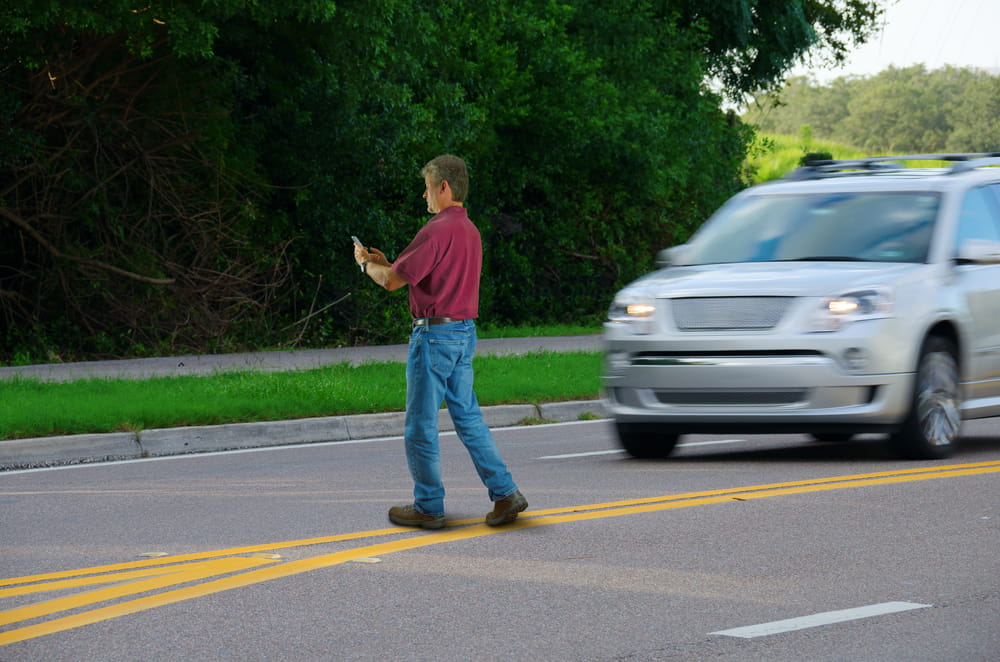
State laws create a complex framework regarding who legally has the right of way during a traffic incident. Many people mistakenly believe that walking outside a crosswalk automatically absolves a driver of all responsibility. This assumption is legally incorrect.
Florida Statute 316.130 outlines specific duties for both pedestrians and drivers, but it places a significant burden on the operator of a dangerous vehicle to act cautiously.
The Driver's Duty of Care
Every driver in Coral Springs and throughout the rest of Florida holds a legal obligation to remain vigilant for hazards, including pedestrians crossing mid-block. This concept (duty of care) requires motorists to operate their vehicles safely and react reasonably to obstacles.
If a driver speeds down University Drive or checks a text message, they breach this duty. A breach of duty can make the driver liable even if the pedestrian violated a traffic statute.
A Coral Springs pedestrian accident attorney argues that a reasonably prudent driver would have seen you and stopped in time.
Interpreting Right of Way
The phrase "right of way" doesn't grant drivers a license to strike a human being. While statutes dictate where pedestrians must yield, they also mandate that drivers give a warning when necessary and take necessary precautions to avoid striking a pedestrian on the road.
Possession of the right of way doesn't permit a motorist to ignore a visible pedestrian. If a driver sees someone jaywalking near Coral Square Mall and fails to slow down, that driver acts negligently. The law prioritizes the preservation of life over technical adherence to crosswalk rules.
The Sudden Emergency Defense
Insurers often argue the sudden emergency doctrine, claiming the pedestrian appeared out of nowhere. Your legal counsel can fight this allegation by showing the driver had a clear line of sight, and investigations often reveal that the driver simply failed to look.
Establishing that the driver had time to react destroys the argument that the accident was unavoidable. Your lawyer scrutinizes the timeline of the crash to prove the driver had the opportunity to yield but chose not to.
Comparative Negligence in Coral Springs
Florida operates under a modified comparative negligence system. This legal standard fundamentally changes how jaywalking in Coral Springs impacts a potential settlement or verdict.
Under this rule, a jury assigns a percentage of fault to each party involved in the accident. You retain the right to seek compensation as long as your percentage of fault doesn't exceed 50%.
How Percentage of Fault Works
The court reduces your total damages by the percentage of fault assigned to you. For example, if a jury determines a claim is worth $1,000,000 but assigns you 10% of the blame for crossing outside a crosswalk, you still recover $900,000. This comparative fault system means you may still be able to sue someone who ran you over, even if you were partially at fault for the accident.
The driver remains responsible for 90% of the fault attributed to their speeding or inattention. This system prevents a minor infraction like jaywalking from barring a victim from receiving necessary financial support.
Common factors that can shift the majority of the blame onto the driver:
- Driver Distraction: Evidence that the driver was texting increases their share of liability significantly.
- Excessive Speed: A motorist traveling above the limit loses the ability to react safely to pedestrians.
- Poor Lighting: Drivers with broken headlights cannot maintain a proper lookout.
The 51 Percent Bar
Recent changes to Florida tort law, specifically, HB837, introduced a 51% bar to recovery. If a jury finds you 51% or more at fault, you recover nothing. Insurance companies are aware of this and argue aggressively that jaywalking in Coral Springs makes you primarily responsible.
A lawyer constructs a case to show that the driver's negligence—such as speeding or distraction—far outweighed your decision to cross outside the cross walk. Your attorney presents facts that weigh the scales of justice in your favor to keep your liability below this critical threshold.
Impact on Insurance Negotiations
Insurers use comparative negligence as a tool to lower settlement offers. They might admit that the driver hit you, but argue that your actions justify a 40% reduction in payout. Your personal injury lawyer can reject these initial calculations by presenting concrete evidence of the driver's negligence or recklessness.
Forcing the insurer to acknowledge their policyholder's primary role in causing the collision helps increase the compensation you may recover. Your Coral Springs pedestrian accident lawyer can leverage the law to protect the value of your claim against unfair reductions.
Investigating the Accident Scene
A thorough investigation uncovers the truth behind the collision. Police reports can rely heavily on the driver's statement, especially if the pedestrian required immediate transport to Broward Health Coral Springs.
Independent investigations frequently contradict the initial police findings. Your lawyer analyzes the physical environment to prove the driver had ample opportunity to avoid the crash.
Crucial evidence sources:
- Surveillance Footage: Businesses along The Walk of Coral Springs or residential doorbell cameras often capture the moments leading up to the impact.
- Vehicle Event Data Recorders: Modern cars contain black boxes that record speed, braking patterns, and throttle position seconds before a crash.
- Roadway Physical Evidence: Skid marks or the lack thereof indicate whether the driver attempted to brake or remained distracted until impact.
- Cell Phone Records: Detailed logs reveal if the driver was sending texts near the time of the accident.
Analyzing Line of Sight
Your attorney can visit the scene to document what the driver saw. If the accident occurred on a straight, well-lit section of Royal Palm Boulevard, the driver may lose the argument that they could not see you.
Your lawyer can measure sightlines and use photographs to demonstrate that a focused driver would have spotted a pedestrian hundreds of feet away. This physical evidence directly counters claims that you darted out unexpectedly.
Examining Vehicle Damage
The location of the dent on the vehicle tells a story. If the impact occurred on the front center of the hood, it suggests you were already directly in front of the car. This contradicts any allegations that you walked into the side of the vehicle.
Forensic experts can analyze crush depth and impact angles to reconstruct your position and the vehicle's speed.
Common Driver Defenses and How To Counter Them
Drivers and their insurance carriers utilize specific defenses to evade liability for hitting a pedestrian. They rely on the stigma associated with jaywalking in Coral Springs to sway opinions.
A strategic legal approach can dismantle these defenses one by one. Experienced counsel anticipates their arguments and prepares counter-evidence immediately.
The Dark Clothing Defense
Drivers frequently claim they could not see the pedestrian due to dark clothing or poor lighting, but Coral Springs has many well-lit avenues like Atlantic Boulevard or University Drive. A thorough investigation counters this claim by analyzing the streetlights in the area.
The Unmarked Crossing Argument
The defense may assert that because no crosswalk existed, the driver had no reason to expect a pedestrian. Legal counsel refutes this by highlighting the residential or commercial nature of the area and that it was foreseeable that a pedestrian would be crossing.
Drivers traveling near Mullins Park or heavily populated shopping centers must anticipate foot traffic. Demographic data and traffic patterns show that pedestrians frequent the area, thereby heightening the driver's required level of alertness.
The Green Light Defense
A driver might claim they had a green light and therefore had the absolute right to proceed. The law challenges this absolute interpretation. Even with a green light, a driver cannot run over a pedestrian visible in the intersection.
If you were nearly across the street when the light changed, the driver had a duty to let you finish crossing. Traffic signal timing analysis proves that you entered the roadway before the driver arrived or that the driver accelerated aggressively.
Proving Driver Negligence Beyond the Crosswalk
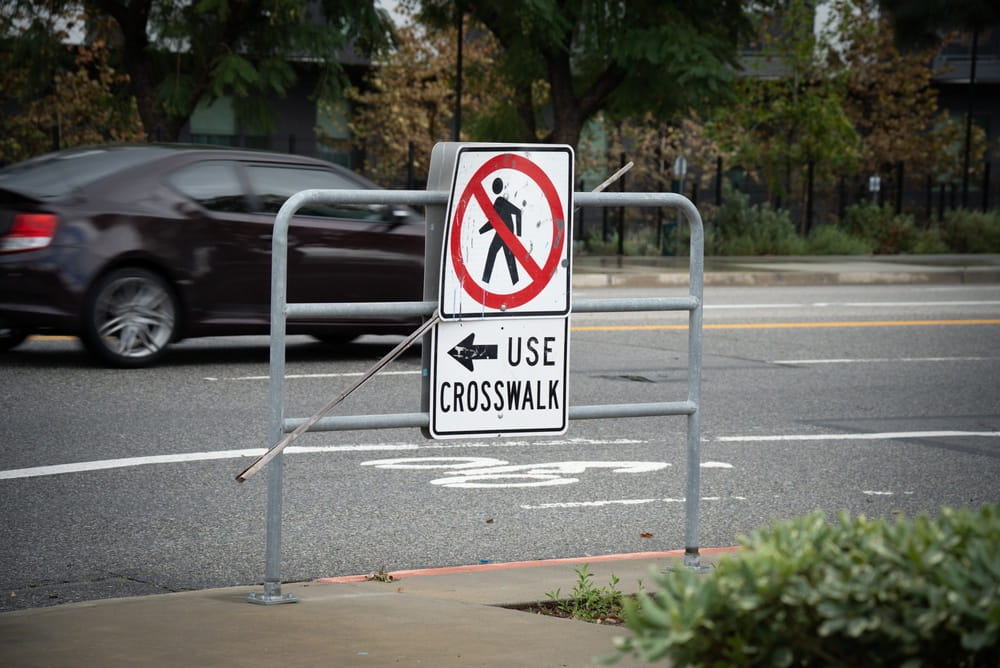
Establishing driver fault requires focusing on their behavior rather than your location. When a car strikes a person, the driver usually commits a moving violation or acts carelessly.
Your attorney can identify specific negligent acts that serve as the primary cause of the injuries. Shifting the focus to the driver's misconduct strengthens your position.
Indicators of driver negligence:
- Excessive Speeding: Drivers exceeding the limit on Coral Springs Drive reduce their own reaction time and increase injury severity.
- Distracted Driving: Motorists looking at GPS devices or passengers fail to scan the road for hazards.
- Failure To Use Headlights: Drivers operating without headlights at dusk or in rain render themselves invisible and blind to pedestrians.
- Impaired Driving: Alcohol or prescription drugs slow reflexes and impair judgment regarding stopping distances.
Speed Analysis
Speed variances significantly alter stopping distances. A car traveling 45 mph requires much more distance to stop than one traveling 35 mph, and accident reconstruction data can calculate the driver's likely speed.
If the driver exceeded the posted limit, they forfeited their right to claim the accident was unavoidable. Proving speed often establishes that the driver holds the majority of the fault.
Distraction Factors
Distraction serves as a leading cause of pedestrian accidents, and any activity that diverts eyes from the road constitutes negligence.
Your Coral Springs pedestrian accident lawyer can argue that a focused driver would have noticed a pedestrian crossing the street, using evidence to scaffold this point.
FAQ for Jaywalking in Coral Springs
Can I Recover Damages if I Was Jaywalking in Coral Springs and Was Struck by a Car?
Yes, Florida law allows you to seek compensation even if you were crossing outside a crosswalk. The state follows a modified comparative negligence standard, which means a jury can assign fault to both the pedestrian and the driver.
As long as the court finds you less than 51% at fault, you can recover a portion of your damages. The driver's negligence often outweighs the pedestrian's error.
Does the Driver Always Have the Right of Way?
No, a driver doesn't possess an absolute right of way to strike a pedestrian. Drivers must exercise due care to avoid collisions. If a driver sees a pedestrian and fails to slow down or stop, the driver bears liability for any resulting injuries.
The law prioritizes human safety over rigid adherence to traffic flow rules.
What if the Driver Claims I Darted Out in Front of Them?
At-fault drivers frequently claim that a pedestrian darted out in front of them to avoid responsibility, but your lawyer can investigate the scene to prove the driver had a clear line of sight. Evidence, such as skid marks or the lack thereof, can indicate that the driver wasn't paying attention.
Who Pays for My Medical Bills After a Pedestrian Accident?
Florida requires drivers to carry Personal Injury Protection (PIP) insurance. In many cases, your own auto insurance PIP covers your initial medical bills even if you were walking. If you don't have auto insurance, or any other PIP source, the driver's PIP coverage may apply to you.
How Long Do I Have To File a Pedestrian Accident Claim in Florida?
Generally, you have two years from the date of the accident to file a claim against the at-fault driver if the crash happened on or after March 24, 2023. Failing to act within this timeframe bars you from seeking compensation.
Get Support for Your Pedestrian Accident
Insurance companies want you to believe that jaywalking in Coral Springs ruins your chance for justice. This is false. Cindy Goldstein Law fights to prove the driver failed you. Our firm will investigate, negotiate, and litigate to secure the financial recovery you need. Contact a Coral Springs personal injury lawyer today for a free case review.