Quick Answer: Who is liable in a Florida motorcycle accident, and does the helmet law affect your claim?
Florida motorcycle accident liability falls on the driver who acted negligently, not automatically on the rider. Riders 21 and older may legally ride without a helmet if they carry at least $10,000 in medical benefits coverage, but the insurance company may still argue that not wearing a helmet contributed to the severity of head injuries under Florida's comparative negligence rule.
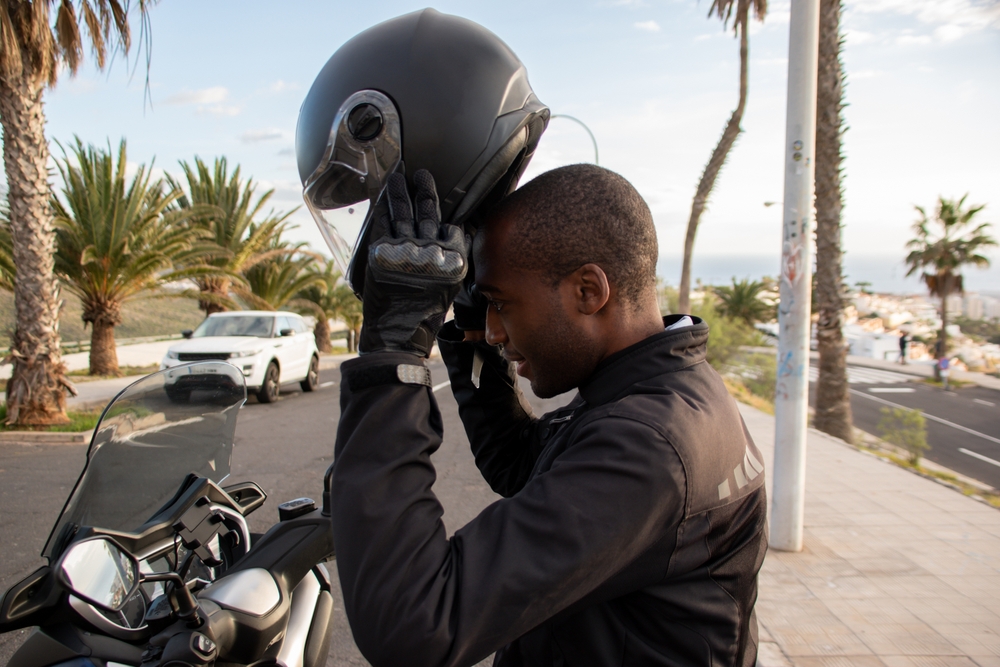
Insurance companies may view motorcycle claims as involving greater risk, and that framing can color conversations about fault, injuries, and compensation.
Florida motorcycle accident liability follows the same negligence rules that apply to any vehicle collision, but the way insurers handle motorcycle claims creates a gap between what the law says and what the adjuster offers.
If you were hurt in a motorcycle crash in Coral Springs or anywhere in South Florida, speaking with an attorney before accepting any offer gives you the clearest picture of what your claim may actually be worth.
SCHEDULE A CONSULTATIONKey Takeaways About Florida Motorcycle Accident Liability and the Helmet Law
- Florida motorcycle accident liability falls on the negligent party, and the rider is not automatically at fault just because they were on a motorcycle.
- Riders 21 and older may legally ride without a helmet under Florida Statute § 316.211 if they carry at least $10,000 in medical benefits coverage, but the insurer may still use the lack of a helmet as a comparative negligence argument.
- Florida's modified comparative negligence rule under Florida Statute § 768.81 reduces your recovery by your percentage of fault and bars it entirely if your share exceeds 50%.
- Motorcycle accident injury compensation in Florida potentially covers medical expenses, lost wages, pain and suffering, and property damage, and the severity of motorcycle injuries often produces higher claim values than similar-speed car crashes.
What Does Florida's Motorcycle Helmet Law Actually Require?
Florida Statute § 316.211 generally requires motorcycle operators and passengers to wear securely fastened protective headgear that complies with Federal Motor Vehicle Safety Standard 218.
Riders under the age of 21 must wear a helmet when riding a motorcycle. Riders over 21 may ride without a helmet if they are covered by an insurance policy providing at least $10,000 in medical benefits for injuries sustained in a motorcycle crash.
The statute also contains limited exceptions for people riding in enclosed cabs and qualifying riders on certain low-powered motorcycles.
The Age and Insurance Breakdown
Florida's helmet requirements split into two groups based on age and insurance status. The rules apply to both operators and passengers.
- Riders under 21 generally must wear an FMVSS 218-compliant helmet.
- Riders over 21 may ride without a helmet if they carry at least $10,000 in qualifying medical benefits coverage.
- Riders over 21 without qualifying coverage generally must wear a helmet.
- Motorcycle operators generally must wear approved eye protection no matter what, including operators who qualify to ride without a helmet.
- Limited statutory exceptions apply to people riding in enclosed cabs and qualifying riders on certain low-powered motorcycles.
A violation of the helmet law is classified as a noncriminal traffic infraction under Florida law. It does not carry license points or jail time. But the more significant consequence for injured riders shows up in the civil claim, not the traffic ticket.
How Insurers Use the Helmet Issue Against You
Riding without a helmet does not automatically bar your claim, even if you did not qualify for Florida's helmet-law exemption. However, the at-fault driver's insurer may argue that helmet nonuse contributed to the severity of a claimed head or brain injury and that you should not be compensated for any head injury sustained in the crash.
To reduce your recovery, the insurer must support that argument with evidence connecting the lack of a helmet to the specific injury. Merely showing that you were not wearing a helmet is not necessarily enough. The helmet issue generally has no effect on compensation for injuries unrelated to the head, such as broken bones or spinal injuries.
Who Is Liable in a Florida Motorcycle Accident?
Florida motorcycle accident liability follows standard negligence rules. The driver who breached a duty of care and caused the crash bears liability for the resulting injuries. Riding a motorcycle does not shift fault to the rider. If you are the driver of an automobile who believes the motorcycle rider was negligent in causing the collision, you must still prove liability on the motorcycle rider. If you are the motorcycle rider who was injured from a collision with another vehicle, you must prove the other driver fell below the standard of care as well. Again, any claimant deemed more than 50% at fault for causing the crash is now barred from any personal injury financial recovery pursuant to HB837.
Common Forms of Driver Negligence in Motorcycle Crashes
The types of driver behavior that cause motorcycle collisions on roads across Coral Springs and Broward County include:
- Failing to check blind spots before changing lanes or merging, particularly on University Drive and the Sawgrass Expressway
- Making a left turn across the path of an oncoming motorcycle at intersections along Sample Road and Coral Springs Drive
- Following too closely behind a motorcycle and failing to stop in time
- Opening a vehicle door into the path of a passing motorcyclist in commercial parking areas
- Texting or using a GPS while a motorcycle is sharing the lane or approaching an intersection
Some behaviors by the motorcyclist can cause or contribute to the collision:
- Lane splitting is the passing of a motorcycle between lanes or rows of stopped/moving vehicles. This is not permitted under any circumstances.
- Lane sharing: standard cards cannot share a lane with a motorcycle but two motorcycles may ride in a single lane side-by-side
- Passengers on a motorcycle are permitted but only if the motorcycle has a permanent regular seat and footrest designed for passengers.
Each of these behaviors breaches the driver's duty of care under Florida law. A police report documenting the driver's violation, combined with witness testimony and physical evidence from the scene, builds the foundation of the liability case.
How Comparative Negligence Affects Motorcycle Claims
Florida's modified comparative negligence system under Florida Statute § 768.81 allows the insurer to argue you share fault. Your recovery drops by your percentage of fault. If your share exceeds 50%, you recover nothing under HB 837.
Insurance adjusters in motorcycle cases raise specific arguments that do not appear in car-on-car claims: the rider was lane-splitting, the rider was traveling too fast and/or weaving in and out of traffic to be visible, or the rider was not wearing a helmet.
An attorney who handles motorcycle injury claims in the Coral Springs area knows how to counter each of these arguments with traffic law and crash evidence.
How Does Helmet Status Affect Your Motorcycle Accident Claim Value?
Whether you wore a helmet at the time of the crash does not determine liability. It may, however, affect the compensation calculation for head and brain injuries. The chart below outlines how the insurer's approach typically shifts based on helmet status.
| Scenario | Helmet Status | Insurer's Typical Approach | Impact on Claim |
|---|---|---|---|
| Rider under 21, no helmet | Violating § 316.211 | Argues the statutory violation is evidence of negligence, seeks to assign a percentage of fault to the rider | May reduce recovery for head and brain injury damages |
| Rider 21+, no helmet, with $10K medical insurance | Legally compliant | Argues that wearing a helmet might have reduced head injury severity, even though the rider met the legal exemption | May reduce the pain and suffering portion of head injury damages, but the rider did not break any law |
| Rider 21+, no helmet, without $10K medical insurance | Violating § 316.211 | Combines the statutory violation with the head injury severity argument for a stronger comparative fault claim | Stronger basis for reducing recovery than the compliant scenario |
| Rider wearing a DOT-approved helmet | Fully compliant | Helmet argument is unavailable; insurer focuses on other comparative fault theories | Helmet is not a factor in the damages calculation |
The insurer's ability to use helmet status against you depends on the specific facts of the crash and the injuries involved.
A rider with leg fractures and no head injury faces no helmet-based reduction, regardless of whether a helmet was worn. The argument only applies when the claimed damages include head or brain injuries.
SCHEDULE A CONSULTATIONWhat Compensation May a Florida Motorcycle Accident Claim Include?
Motorcycle accident compensation in Florida covers the same categories as any personal injury claim, but the amounts tend to run higher because motorcycle crash injuries are typically more severe than car accident injuries at comparable speeds.
Categories of Recoverable Losses
A motorcycle accident injury claim in the Coral Springs area may include:
- Medical expenses for emergency care, surgery, hospitalization, physical therapy, prescription medication, and projected future treatment
- Lost wages from missed work, along with reduced earning capacity if the injury limits your ability to perform your job going forward
- Pain and suffering for the physical discomfort and emotional distress caused by the crash and recovery
- Property damage to your motorcycle, riding gear, and personal belongings
Motorcycle riders absorb the full force of a collision without a vehicle frame, airbag, or seatbelt. Road rash alone may require skin grafts and reconstructive surgery.
Traumatic brain injuries, spinal cord damage, and multiple fractures are common. That injury profile drives higher medical costs and longer recovery timelines, which directly increases claim value when the evidence and coverage support it.
FAQs for Florida Motorcycle Accident Liability
I was riding without a helmet and got hit by a car in Florida. Do I lose my right to file a claim?
No. Riding without a helmet does not bar your injury claim in Florida. If you are 21 or older and carried at least $10,000 in medical benefits coverage, you were legally compliant.
Even riders who violated the helmet law may still recover compensation, though the insurer may argue the violation contributed to head injury severity under comparative negligence.
The other driver's insurance says the crash was partly my fault because I was on a motorcycle. Is that a real argument?
Riding a motorcycle does not create fault. Florida negligence law applies the same standard to motorcyclists as it does to car drivers.
The insurer must prove you were negligent, such as lane splitting, speeding or running a light, to argue comparative fault. Simply being on a motorcycle is not a basis for shared liability.
What if the driver who hit me has no bodily injury insurance?
Florida's PIP requirements do not cover injuries sustained while operating or riding on a motorcycle. Motorcycle policies often offer Medpay instead of PIP. If you did not elect Medpay coverage on your motorcycle policy, you may seek medical care through applicable health insurance.
Your own uninsured or underinsured motorist coverage may provide compensation if the at-fault driver has no bodily injury liability insurance or does not have enough coverage. Available coverage depends on the terms of your motorcycle and auto insurance policies. Reviewing those policies with an attorney can help identify every potential source of compensation.
Do I have to wear a helmet to ride a motorcycle in Florida?
It depends on your age and insurance. Riders under 21 must wear a FMVSS 218 compliant helmet. Riders 21 and older may ride without one if they carry at least $10,000 in medical benefits coverage under Florida Statute § 316.211.
How long do I have to file a motorcycle accident lawsuit in Florida?
Two years from the date of the crash under Florida Statute § 95.11, as amended by HB 837 to file suit against the negligent party. The statute of limitations for UM claims is 5 years since it's based on breach of contract. This deadline does not pause for insurance negotiations or medical treatment.
Does Florida require motorcycle insurance?
Florida generally does not require motorcycle owners to purchase insurance simply to register a motorcycle, and motorcyclists are not covered by Florida's personal injury protection requirements while operating a motorcycle.
However, Florida's financial-responsibility laws may require a rider to demonstrate the ability to pay for damages after certain crashes or violations. Riders may also choose bodily injury liability, Medpay, and uninsured or underinsured motorist coverage to protect themselves and others.
My passenger was injured in the motorcycle accident. Do they have a separate claim?
Generally yes. A motorcycle passenger injured in a crash may file a separate injury claim against the at-fault driver. The passenger's claim follows the same negligence and comparative fault rules that apply to the operator's claim.
How much does it cost to hire a motorcycle accident lawyer?
Nothing upfront. Cindy Goldstein Law works on a contingency fee basis, meaning you pay no fees or costs unless the firm recovers compensation for you. The first conversation is free. Call (954) 346-5420.
Get Clarity on Your Florida Motorcycle Accident Claim
The insurance company is already building its position on your motorcycle accident claim. The adjuster has the police report, your medical records, and a strategy for using the helmet issue, your riding history, and the severity of your injuries to minimize what the company pays. Cindy Goldstein Law has represented injured motorcyclists in Coral Springs and across the Parkland community for more than two decades, and the firm handles all communication with the insurance carrier from the first call through resolution on a contingency fee basis. Call (954) 346-5420 to talk through the specifics of your case.