Slip and fall claims may seem straightforward, but the outcome usually depends on how well the facts establish what happened. Winning a slip and fall case requires clear evidence showing that the property owner’s negligence directly caused your injuries. A major hurdle in slip and fall cases is transitory foreign substance law. In Florida, a transitory foreign substance is a temporary solid of liquid item (like spilled water, dropped ice, laundry detergent, food, debris) on the floor of a business that does not belong there, causing a slip and fall hazard. Pursuant to Florida Statute 768.0755, if a person slips and falls on a transitory foreign substance in a business establishment, the injured person must prove that the business establishment had actual or constructive knowledge of the dangerous condition and should have taken action to remedy it. Constructive knowledge may be proven by by circumstantial evidence showing that:
(a) The dangerous condition existed for such a length of time that, in the exercise of ordinary care, the business establishment should have known of the condition; or
(b) The condition occurred with regularity and was therefore foreseeable.
When the evidence proves such negligence, your chances of securing compensation increase significantly.
If you’ve suffered an injury in a fall due to a dangerous condition, your first step toward overcoming these hurdles should be a consultation with a Coral Springs, FL, slip and fall attorney at Cindy Goldstein Law. They can provide an honest assessment of your case and explain your rights. Call (954) 346-5420 to learn how you can turn a challenging situation into the fair recovery you deserve.
Key Takeaways: Is It Hard to Win a Slip and Fall Case
- Slip and fall incidents are governed by transitory foreign substance law.
- Winning a slip and fall case requires well-preserved evidence that demonstrates a dangerous condition existed and that the premises owner knew or should have known of the hazardous condition and failed to address it.
- These cases are challenging because of inherent difficulties, such as the burden of proving actual or constructive knowledge of the hazardous condition.
- Immediate evidence, such as surveillance footage, can vanish quickly, making timely documentation essential to building a successful claim.
- Taking quick steps such as reporting the incident and preserving physical evidence significantly strengthens your case.
- A slip and fall lawyer can seek time-sensitive evidence, interpret state-specific safety standards, challenge insurance tactics, and assemble expert support when needed.
- Consult with Cindy Goldstein Law to access legal guidance that helps protect your rights and improves your chances of recovery for your injuries.
Why Are Slip and Fall Cases an Uphill Battle?

Slip and fall cases demand a level of proof that many injured people don’t realize until they initiate the legal process. Property owners and insurers rarely accept responsibility without challenge, which means every detail of how the fall occurred must be demonstrated clearly and convincingly. Cindy Goldstein Law works closely with clients to build strong claims, but understanding why these cases are complex can help prepare for the road ahead.
The Burden of Proof Falls Totally on You
You must show that the hazard existed, that the property owner knew about it, or had at least constructive knowledge of it, and that it directly caused your injuries. The property owner does not have to prove that their property was safe; it is up to you to prove that it was unsafe and what they knew. It usually requires photographs, incident reports, medical documentation, and witness accounts.
Without proof of existing risk, the insurance company may argue that there is no reliable evidence of what actually happened or that the business owner had actual or constructive knowledge. Since the claimant has the burden of proof, your legal counsel will attempt to gather strong evidence early, which becomes a key part of building a winning slip and fall claim.
Reasonable Care Standard
Slip and fall cases rest on whether the premises owner took reasonable steps a careful and prudent person would under similar circumstances. It requires looking at how long the danger was present and what the owner did or failed to do during that period. For example, if a spill occurred seconds before your fall, the owner may argue they had no meaningful opportunity to address it, in other words no actual or constructive knowledge of the hazardous condition. However, if it sat unnoticed for hours, it becomes more likely that the premises owner had constructive knowledge of it.
Comparative Negligence
In many states, compensation can be reduced if the injured person is found partially responsible for their own fall. In Florida, pursuant to HB837 enacted in 2023, if a claimant is deemed 51% at fault or more, it is now a complete bar to any recovery. However, insurers have always attempted to shift blame on the claimant to avoid liability. They may argue that you were distracted, not paying attention to where you were walking, you walked into an area that wasn’t meant for customers, or ignored warning signs.
In premises liability claims, even a small percentage of fault assigned to you can lead to a significant reduction in compensation. This is why clear evidence and strong legal advocacy are necessary to protect your rights.
The Challenge of Preserving Immediate Evidence
Slip and fall evidence can disappear quickly. Surveillance footage may be deleted within days, floor conditions can be cleaned up within minutes, and witnesses may leave the scene before anyone has a chance to speak with them. Without quick action, these crucial details may be lost forever.
Having photographs, videos, and timely witness statements can make the difference between a strong case and one that is difficult to prove. If you slip and fall on the premises, it is important to photograph or video the hazardous condition with your smartphone if you can. Flag down any potential witnesses and obtain their names and contact information. Reporting the incident to the business establishment, including the hazardous condition, and obtaining the name of a manager, are all helpful in proving what happened. A slip and fall attorney can send preservation letters and request evidence before it vanishes, but delays can severely undermine the strength of your claim.
The Keys to Strengthening Your Slip and Fall Case
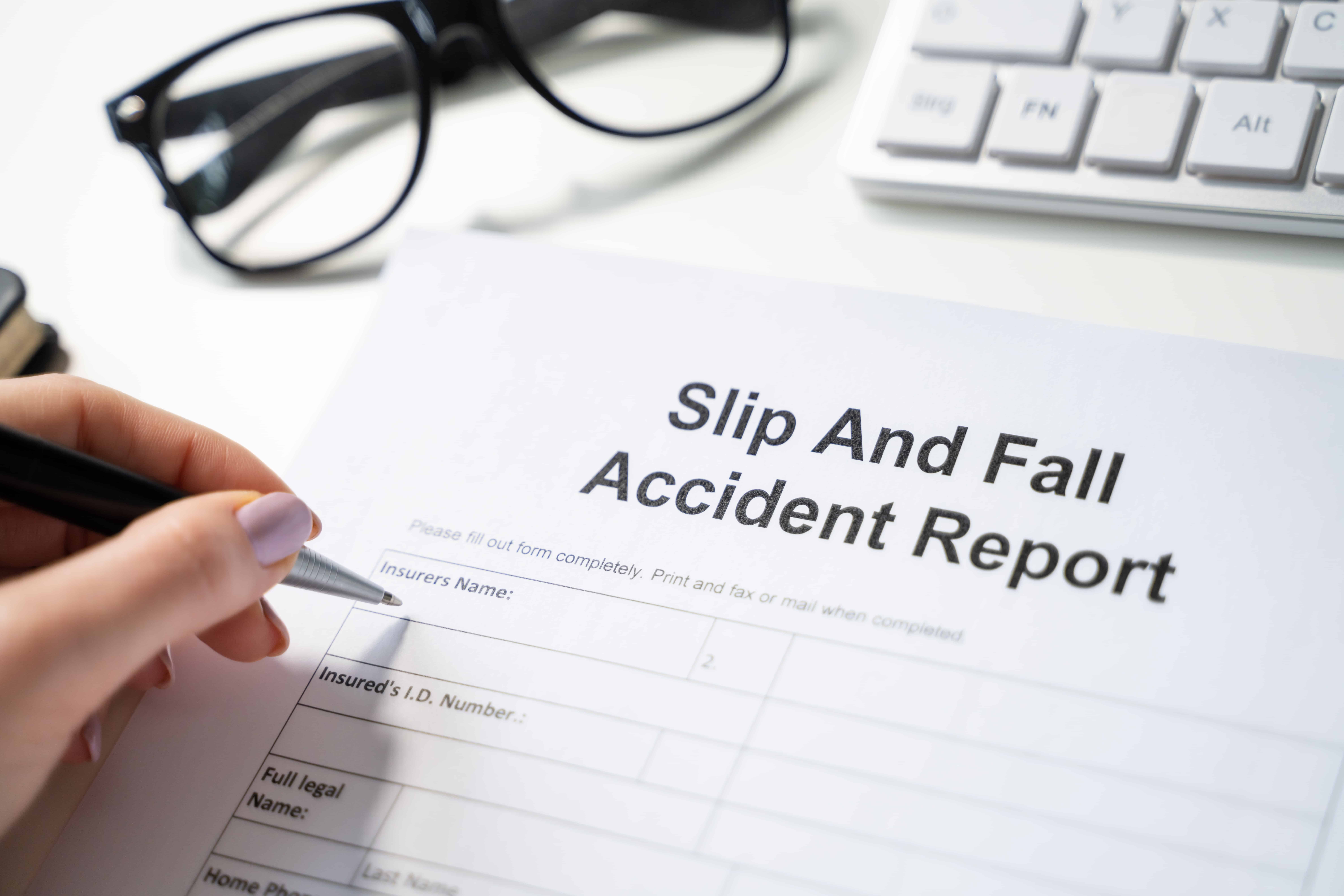
A strong slip and fall claim relies on clear, organized, and timely evidence. Each step you take after the incident plays a direct role in proving what happened, how the hazard caused your injuries, and why the property owner should be held responsible. Here are the ways you can strengthen your case:
Document the Scene Thoroughly
Photographs and videos taken immediately after the fall carry tremendous weight. Capture the hazard from multiple angles so the condition is accurately preserved. Include close-up images of the unsafe area as well as wider shots that show its location within the property. If danger prevention signs were missing, damaged, hidden, or placed too far away to be effective, ensure these details appear in your documentation. It creates a visual record that shows the environment exactly as it appeared at the time of the incident.
Report the Incident Without Delay
Notifying a manager or property owner creates an official record of the event, which becomes a cornerstone of the claim. Ask for a copy of the incident report before leaving the premises. This document usually includes the time, date, hazard, and the parties involved. It also prevents the property owner from later arguing that the fall never happened or that it occurred under different circumstances. Immediate reporting adds credibility to your account and strengthens your position with the insurer.
Identify and Preserve Witness Information
Witnesses can confirm the presence of the hazard, describe your fall, or testify about conditions the property owner may have ignored. Obtain names, phone numbers, or email addresses from anyone who saw what occurred or observed the dangerous condition shortly beforehand. Their statements can reinforce your account, especially if the property owner disputes the duration of the hazard or its visibility. Accurate witness information helps counter arguments aimed at shifting blame onto you.
Seek Prompt Medical Care
Medical evaluation ties your injuries directly to the fall, forming an essential link in your claim. Even if pain seems minor at first, a healthcare provider’s assessment helps establish a timeline and identify hidden injuries that may worsen. Follow the treatment plan exactly as instructed, attend all follow-up appointments, and keep copies of medical records, imaging results, and bills. This documentation reflects your condition over time, which becomes vital when proving long-term impact or the need for ongoing care.
Protect and Save Physical Evidence
Items such as the shoes and clothing you wore at the time of the fall should be kept in their original condition. These objects may show signs of the hazard, such as slippery residue or tears that support how the fall occurred. Attorneys sometimes use footwear tread patterns, wear-and-tear conditions, or debris collected on clothing to illustrate the mechanics of the incident. Be sure to preserve these items, as they can later help counter attempts to downplay the severity of the hazard or your injuries.
How Does a Slip and Fall Lawyer Help in Your Premises Liability Claim?

Slip and fall claims demand a careful blend of legal strategy, prompt investigation, and an understanding of how property owners defend themselves. This is why working with a personal injury attorney familiar with premises liability law becomes vital. When you suffer an injury, your attorney ensures that no opportunities are missed and that every aspect of the claim is supported by reliable documentation and professional analysis.
A lawyer’s priority is securing time-sensitive evidence. Surveillance footage is often overwritten within days, and physical hazards can be repaired or removed almost immediately. By acting quickly, your attorney can preserve video recordings, obtain maintenance logs, and identify employees or witnesses who can confirm the condition of the property at the time of the fall. These early investigative steps frequently determine how strong the claim will be.
Premises liability cases also require interpreting state-specific standards for property maintenance. Each jurisdiction has unique rules governing inspections, hazard removal, lighting, flooring materials, and even how long a dangerous condition must exist before liability attaches. A lawyer evaluates whether the property owner violated industry customs, building codes, or local safety regulations that may strengthen your argument. This legal framework provides the foundation for proving negligence, and it is an area where most claimants benefit from focused professional insight.
Insurance companies defending these claims tend to question every element of your case, from the hazard itself to your medical treatment. When claims adjusters challenge your account or attempt to shift blame onto you, your attorney intercepts those communications and presents evidence in a way that leaves less room for disputes. It protects your statements from being misinterpreted and prevents the insurer from pressuring you into accepting a settlement that does not reflect the full scope of your losses.
Some cases require specialized testimony to explain why the property owner should be held responsible. Attorneys collaborate with engineers who can evaluate flooring materials or lighting, safety experts who can examine maintenance procedures, and medical professionals who can outline the long-term effects of your injuries. These experts help establish that the hazard existed long enough to be addressed, that it posed a foreseeable risk, and that it directly caused your injuries. Their findings make the overall case far more persuasive.
Finally, your lawyer brings together the evidence, expert input, and legal arguments into a clear and coherent narrative. They show how the dangerous condition developed, why the property owner should have acted sooner, and how the fall has affected your health and daily functioning. This narrative becomes the backbone of negotiations and, if necessary, a courtroom presentation.
Frequently Asked Questions: Slip and Fall Cases
My fall happened at a friend’s house or a family member’s property. Can I still bring a claim or sue?
Legally, yes, because the same premises liability principles apply. However, these situations are emotionally challenging. A claim is usually filed against their homeowner’s insurance policy, not against the individual personally. Still, it can strain relationships. An attorney can help manage this sensitively by negotiating directly with the insurer while minimizing personal conflict. The decision to proceed is a personal one that balances your need for compensation against the value of the relationship.
Does it matter what shoes I was wearing at the time of the fall?
Footwear can become an issue because insurers may use it to argue that improper or unsafe shoes contributed to the incident. Keeping the shoes you wore can help a lawyer push back on such claims and demonstrate that it is the hazard that actually caused the fall. The type and condition of your shoes form part of the evidence that supports how the accident unfolded.
The property owner offered me a small, quick settlement. Should I take it?
The answer depends on whether or not the offer adequately covers your losses. You need to be extremely cautious because Insurers may make low initial settlement offers soon after an accident, hoping you will accept before you understand the full extent of your injuries or the value of your claim. Once you sign a settlement release, the settlement amount is full and final; you forfeit your right to seek any future compensation, even if you later discover you need surgery or have permanent limitations. It is always in your best interest to consult a slip and fall lawyer before accepting any offer or signing any documents from an insurer.
A Coral Springs, FL Slip and Fall Lawyer Can Help You Construct a Successful Case
A successful premises liability claim is the avenue to addressing the injuries and financial losses that follow a slip and fall. If you’ve suffered an injury in a fall due to a dangerous condition, your first step toward justice should be a consultation with a personal injury attorney. The legal team at Cindy Goldstein Law can review the facts of your fall, determine the strength of your claim, and take the steps necessary to protect your rights. Reach out at (954) 346-5420 to discuss your situation and learn how to approach your pursuit of recovery.