Quick Answer: How can I prove the other driver was texting when they hit me in Florida?
To prove a driver was texting when they hit you in Florida, you may use cell phone carrier records, device forensic data, app activity logs, witness testimony, and physical crash evidence such as lack of braking before impact. Florida law prohibits texting while driving under Florida Statute § 316.305, and proof of texting at the time of a crash may support a civil negligence claim.
Proving a driver was texting during a Florida crash requires evidence linking phone use to the moment of impact. Helpful proof may include phone records, forensic data, app activity, witness statements, dashcam or surveillance footage, and crash-scene evidence showing the driver failed to brake or steer.
Florida Statute § 316.305 prohibits texting while driving. A citation can help support an injury claim, but it is not required to prove negligence. The key question is whether the driver was distracted and failed to use reasonable care.
Because phone data, video footage, and vehicle evidence can disappear quickly, these cases often depend on early action to preserve records, identify witnesses, and document evidence before it is lost or repaired away.
Key Takeaways About Proving a Driver Was Texting in Florida
- Cell phone carrier records show call and text timestamps but not app usage. Proving app use at the time of impact often requires a forensic inspection of the device itself.
- A traffic citation for texting while driving may help a civil case but is not required. Civil negligence claims use a lower standard of proof than criminal charges.
- Florida courts have allowed forensic inspection of a driver's phone for a limited time window around the crash, balanced against the phone owner's privacy rights.
- Preservation letters sent early may strengthen a later spoliation argument if evidence is deleted or overwritten before a lawsuit is filed.
- Physical evidence at the crash scene, including the absence of skid marks or evasive steering, may support a texting claim even without access to the phone.
What Does Florida Law Say About Texting While Driving?

Florida prohibits texting while driving statewide under Florida Statute § 316.305. The law bans manual typing, sending, or reading of texts, emails, and instant messages while a vehicle is in motion.
Handheld phone use is further restricted in school zones, school crossings, and active work zones under Florida Statute § 316.306.
How Does the Criminal Standard Differ From the Civil Standard?
The criminal standard for a texting ticket requires proof of a specific statutory violation beyond a reasonable doubt. A civil injury claim requires proof that the driver failed to act with reasonable care by the preponderance of the evidence, which is broader and lower.
You do not need a citation or a conviction to pursue a civil claim. If the driver was scrolling social media, watching a video, or reading a news article, none of those may violate § 316.305 directly. All of them may still support a negligence claim.
How Does § 316.306 Apply in School Zones?
Florida Statute § 316.306 bans all handheld phone use during posted hours in school zones, school crossings, and active work zones statewide. This is a broader restriction than the texting-only ban under § 316.305.
The Florida Department of Highway Safety and Motor Vehicles publishes guidance on how both provisions are enforced. Coral Springs has a high concentration of school zones along University Drive, Sample Road, and Wiles Road.
A violation of § 316.306 does not automatically increase civil liability, but evidence that the driver was holding a phone in a restricted zone may support a negligence argument.
What Digital Evidence Proves a Driver Was Texting?
Digital evidence that proves texting includes carrier call detail records (CDRs), device-level app logs, and infotainment system data. Each source captures different information and requires a different method to obtain.
| Data Source | What It Shows | How It Is Obtained |
|---|---|---|
| Carrier call detail records (CDRs) | Timestamps of calls and texts, data sessions, cell tower connections | Subpoena to the wireless carrier after a lawsuit is filed, or by written authorization from the account holder |
| Device forensic inspection | App activity, deleted messages, GPS history, browser use, screen-on time | Court order allowing a forensic examiner to image the phone for a limited time window around the crash |
| App-level server data | Timestamps for social media posts, rideshare activity, streaming use | Subpoena to the app provider, though retention policies vary widely |
| In-vehicle infotainment logs | Bluetooth pairing events, navigation input, media controls, hands-free call history | Forensic download from the vehicle's onboard system, often through the dealer or an accident reconstruction professional |
| Event Data Recorder (EDR) | Pre-crash speed, braking input, throttle position, steering angle | Download using manufacturer-specific tools, typically by an accident reconstruction professional before the vehicle is repaired or scrapped |
Carrier records may show a text was sent near the time of the crash. Device inspection may reveal what apps were open.
EDR data, when properly analyzed, may indicate a lack of braking input. Together, they help build a timeline consistent with what you observed.
How Do Attorneys Get Cell Phone Records in a Florida Lawsuit?
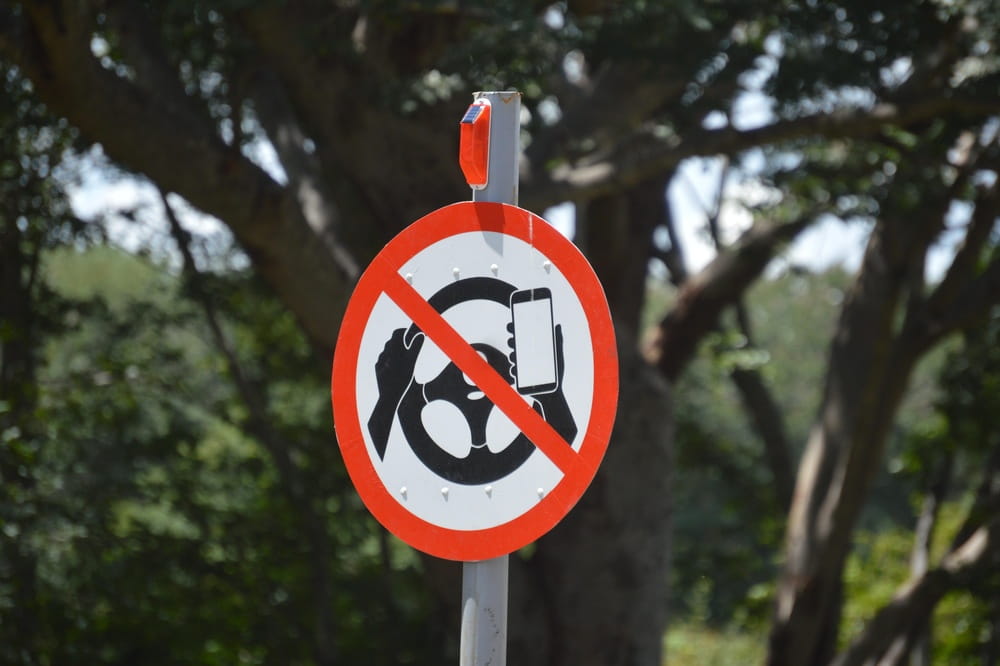
Practically speaking, it's very difficult to obtain this evidence in a pre-suit status of your case because the defendant will rarely voluntarily produce any of this evidence without a court order. Hence, if this evidence is necessary to prove your case, an immediate lawsuit may be filed and expedited. Once in litigation, Attorneys get cell phone records through formal discovery, the pre-trial process where both sides exchange evidence. Florida's Rules of Civil Procedure, specifically Rule 1.280, allow parties to request documents and electronically stored information (ESI) relevant to the case.
Subpoena to the Carrier
A carrier subpoena produces CDRs, text timestamps, and data session logs. Timestamp precision varies by carrier and record type.
These records generally do not include message content, but a timestamp showing active phone use near impact may be significant evidence.
Court-Ordered Device Inspection
Florida courts have permitted forensic inspection of a driver's phone for a limited window surrounding the crash. A neutral forensic examiner images the device and reviews only data within the relevant time period.
Device inspection may reveal which apps were open, whether a text was being typed but never sent, and what GPS data the phone recorded.
What Are Pre-Suit Preservation Letters?
A pre-suit preservation letter is a formal written demand that a party retain specific evidence in anticipation of litigation. The letter does not compel production or create a standalone legal duty to preserve. It does put the recipient on notice that litigation is anticipated and they need to preserve the evidence.
Florida courts consider foreseeability of litigation and the recipient's awareness when evaluating whether a duty to preserve arose.
A preservation letter strengthens a later spoliation argument if evidence is destroyed after notice. A letter sent in the first week may protect records that would otherwise be cycled out before suit is filed.
What Happens If the Other Driver Deletes Their Texts?
Deleting texts does not necessarily destroy the evidence. Carrier records exist independently of the phone and may still show that a text was sent at the relevant time.
Can a Forensic Examiner Recover Deleted Messages?
Forensic examiners may recover deleted messages from a phone's internal storage in some cases. Success depends on the device model, operating system, and how recently the data was overwritten.
Recovery is not guaranteed but is often possible when the phone has not been wiped or factory-reset.
What Are Spoliation Sanctions?
Spoliation sanctions are penalties a Florida court may impose when a party destroys evidence it had a duty to preserve. Florida courts may issue an adverse inference instruction, strike defenses related to phone use, impose monetary sanctions, or enter default judgment on liability.
Sanctions depend on whether the driver knew or reasonably should have known the evidence was relevant to anticipated litigation. Deleting phone data after a preservation demand may also seriously damage the driver's credibility at trial.
What Physical Evidence Supports a Texting Claim Without the Phone?
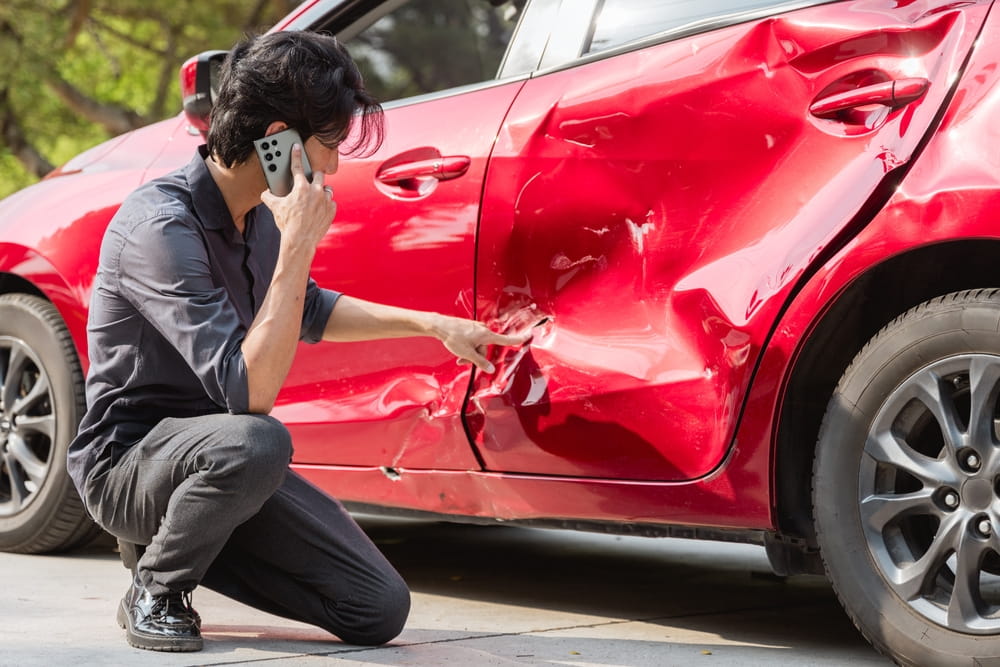
Physical and circumstantial evidence at the crash scene may support a texting allegation even when phone records are unavailable. Several patterns commonly appear in texting-related collisions:
- No skid marks or evidence of braking before impact, suggesting the driver may not have seen the hazard.
- No evasive steering, indicating the driver's eyes and hands may not have been on the road.
- Rear-end collisions at full speed into stopped or slowing traffic, a common texting-crash pattern on University Drive and Sample Road.
- EDR data, when available, showing absence of braking input before impact, as interpreted by a qualified professional.
- Witness observations of the driver's head position, hand position, or phone in hand immediately before or after the crash.
This evidence may not prove texting on its own. Combined with partial digital records, it builds a circumstantial case that becomes difficult for the defense to explain away.
How Does Cindy Goldstein Law Handle Texting-While-Driving Cases?
We handle texting-while-driving cases by treating the first week after a crash as the window that shapes the rest of the file. Cindy has spent her career litigating against Florida insurance companies and understands how carriers respond when a distraction allegation arrives without supporting records.
Our office is at 10100 W. Sample Road, Suite 200, Coral Springs, FL 33065. Call (954) 346-5420 or 1-844-4LADYLAW to discuss the evidence in your case at no cost.
Why Adjusters Push Back on Texting Allegations
Insurance adjusters often treat a texting allegation as an opinion unless records back it up. A claim with timestamped carrier data showing an outbound text near impact gets a very different response than one without it.
We focus on assembling that documentation early, sending preservation demands within days of being retained and pulling police reports that may contain the driver's own admissions about phone use.
Multilingual Support
Our team works with clients in English, Spanish, Portuguese, and Haitian Creole throughout the claim.
Ask Cindy Goldstein Law
How long do cell phone companies keep text records?
Most carriers retain CDRs and text logs for roughly one to two years, though exact periods vary by carrier and record type.
Message content is generally not retained. Acting within the first few months gives the strongest chance of obtaining complete records through subpoena.
What if the police did not cite the other driver for texting?
A citation is helpful but not required. Civil cases use a lower burden of proof, so evidence that falls short of a citation may still support a negligence claim.
Carrier records, device data, and witness testimony function independently of whether a ticket was issued.
Does my lawyer need the actual phone to prove texting?
Not always. Carrier records, app server data, and infotainment logs may indicate phone activity without physical access to the device.
If more detail is needed, an attorney may seek a court order for forensic inspection within a narrow time window around the crash.
FAQs for How to Prove a Driver Was Texting When They Hit You in Florida
Is it illegal to text and drive everywhere in Florida?
Yes. Texting while driving is illegal statewide under § 316.305. Handheld phone use in general is only banned in school zones, school crossings, and active work zones under § 316.306.
Do I need to prove the exact message the driver was reading?
Generally no. Timestamp evidence showing active phone use near impact may be enough. The content of a specific message is often less important than the timing.
What if the other driver claims they were using GPS, not texting?
GPS use may still support a distracted driving claim if it contributed to inattentive driving. Florida's texting ban under § 316.305 exempts navigation, but a civil negligence claim is broader.
Interacting with navigation in a way that diverted attention from the road may still meet the negligence standard.
How quickly does cell phone evidence disappear after a crash?
Carrier records may survive one to two years. Surveillance footage may be overwritten within days.
Vehicle infotainment data may be lost once the vehicle is driven, repaired, or scrapped. The safest approach is to treat every category as degrading from the day of the crash.
Does a dashcam help prove the other driver was texting?
Yes, if it captured the moments before impact. Footage showing the other driver looking down or failing to react to stopped traffic may support a texting allegation, especially when paired with digital records confirming phone activity at the same time.
Act Now to Prove the Driver Was Texting When They Hit You
Every category of texting evidence degrades on its own schedule. The carrier, the app company, and the gas station with the security camera all run their own retention clocks. Once those clocks expire, the proof is gone.
If you were hit by a texting driver in Coral Springs, Broward County, or anywhere in Florida, call Cindy Goldstein Law at (954) 346-5420 or 1-844-4LADYLAW to find out what evidence may still be available.
The information on this page is for general informational purposes only and does not constitute legal advice. No attorney-client relationship is formed by reading this content. Prior results do not guarantee a similar outcome.