What compensation is available after a Florida drunk driving accident?
Settlement value depends on various factors including the extent of your injuries, total past and future medical bills, liability and facts of loss, causation, and the policy limits. Drunk driving accident compensation in Florida includes medical expenses, lost wages, pain and suffering, and property damage. Unlike standard car accident claims, DUI injury cases may also support a claim for punitive damages if the driver's conduct meets the legal standard for gross negligence or intentional misconduct under Florida Statute § 768.72.
A drunk driver's decision to get behind the wheel while impaired separates these cases from every other type of car accident claim in Florida. That deliberate choice may open a path to compensation that standard negligence cases do not offer, including punitive damages designed to punish extreme misconduct.
Drunk driving accident compensation in Florida reflects both the measurable financial losses you suffered and the severity of the driver's behavior. Speaking with an attorney who handles DUI injury cases before accepting any insurance offer is the best way to understand what your claim may include.
Key Takeaways About Drunk Driving Accident Compensation in Florida
- DUI accident victims in Florida may recover compensatory damages for medical bills, lost income, and pain and suffering, plus punitive damages when the driver's conduct meets the standard for gross negligence.
- Punitive damages are not automatic. They require clear and convincing evidence and permission from the court to proceed under Florida Statute § 768.72.
- The criminal DUI case and your civil injury claim run on separate tracks, and a criminal conviction is not required for you to pursue civil compensation.
- Florida's modified comparative negligence rule under Florida Statute § 768.81 may reduce your recovery if the insurer argues you share fault, and bars it entirely if your fault exceeds 50%.
What Compensatory Damages May You Recover After a DUI Accident in Florida?
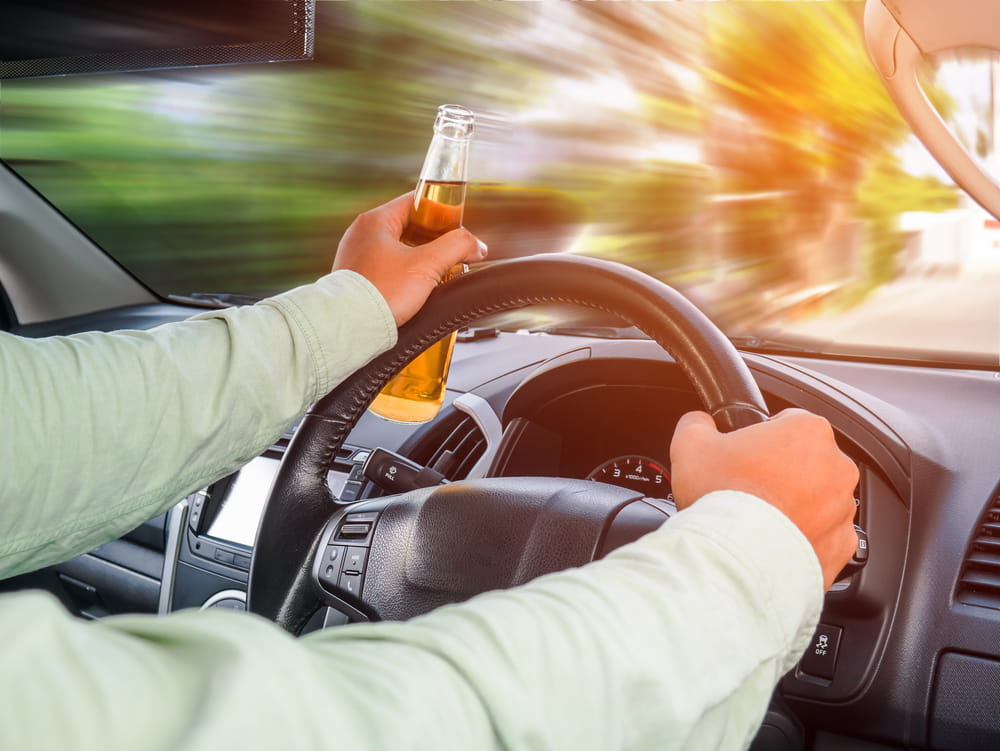
Compensatory damages cover the actual losses the accident caused you. These fall into two categories: economic damages with a clear dollar value and non-economic damages that reflect the personal toll of the injury. Together, they form the core of any drunk driving accident compensation claim in Florida.
Economic Losses
Economic damages are the costs you prove with bills, receipts, pay stubs, and medical records. These are the losses with a paper trail, and they form the baseline of what the insurance company evaluates when reviewing your claim.
A DUI accident claim in Florida may include the following economic losses:
- Medical expenses for emergency care, surgery, hospitalization, physical therapy, prescription medication, and projected future treatment related to the crash
- Lost wages from missed work during recovery, along with reduced earning capacity if the injury permanently limits your ability to perform your job
- Out-of-pocket costs for medical equipment, home modifications, transportation to appointments, and household help you need during recovery
- Property damage to your vehicle and personal belongings destroyed or damaged in the crash
Because impaired drivers often fail to brake or react before impact, DUI crash injuries tend to be more severe than injuries in comparable collisions where the at-fault driver attempted to stop. Higher-speed impacts with no braking produce worse injuries including but not limited to fractures, more serious head trauma, and longer hospitalizations. All of that directly increases the economic damages in the claim.
The gap between a minor fender-bender and a full-speed DUI collision shows up clearly in the medical records. Emergency surgery, ICU stays, and months of physical therapy produce documented costs that anchor the economic side of the case.
Non-Economic Losses
Non-economic damages compensate for losses that do not come with a receipt. Pain and suffering is the primary category, and it accounts for the physical discomfort, emotional distress, anxiety, and loss of enjoyment of life caused by the accident and the recovery process.
Florida does not cap pain and suffering damages in most personal injury cases. The value of this portion of the claim hinges on severity, permanency, and how effectively the evidence communicates the day-to-day impact on your life.
A DUI victim who suffers a permanent spinal injury and loses the ability to play with their children has a very different pain and suffering claim than someone who recovers fully in eight weeks. The permanency of the injury is one of the strongest drivers of non-economic damage value.
Mental health effects also factor into non-economic damages. Anxiety while riding in a car, flashbacks triggered by driving past the crash site, difficulty sleeping, and post-traumatic stress symptoms all carry weight in the claim when documented by a treating provider.
When Do Punitive Damages Apply in a Florida Drunk Driving Case?
Punitive damages in Florida are damages a court awards to punish extreme misconduct, not to compensate the victim for specific losses. Under Florida Statute § 768.72, a court may award punitive damages when clear and convincing evidence shows the defendant acted with gross negligence or intentional misconduct.
What Gross Negligence Means in a DUI Case
Gross negligence under Florida law means conduct so reckless that it amounts to a conscious disregard for the safety of others. Driving while intoxicated may meet that standard depending on the specific facts.
Factors that may strengthen a punitive damages claim in a Florida DUI accident case include:
- A BAC well above the legal limit of 0.08
- Prior DUI convictions or a history of alcohol-related offenses
- Evidence the driver consumed alcohol at a bar or event and then chose to drive
- Extreme speed, reckless lane changes, or other dangerous driving behavior combined with impairment
Punitive damages are not available in every DUI case and are not awarded automatically. The court must approve a motion to amend the complaint before the claim moves forward. Many drunk driving cases do not result in punitive damages, but when the facts support the claim, this category of recovery may add significantly to the total.
How Does the Criminal DUI Case Affect Your Compensation Claim?

The criminal case and the civil injury claim are separate proceedings. The state of Florida prosecutes the DUI under Florida Statute § 316.193 to punish the driver. Your civil claim seeks financial recovery for the harm the driver caused you.
Why You Do Not Need a Criminal Conviction to File
A criminal conviction is not required for your injury claim to move forward. The civil case uses a lower standard of proof, called preponderance of the evidence, meaning more likely than not.
Even if criminal charges are reduced or dismissed, your civil claim may still succeed based on the available evidence, including BAC results, police reports, and witness testimony.
Evidence from the criminal case file, such as toxicology reports and the arresting officer's observations, may support both your compensatory damages and your punitive damages request.
How Does Comparative Negligence Reduce DUI Accident Compensation in Florida?
Even when the other driver was clearly intoxicated, the insurance company may argue you share fault for the crash. Under Florida's modified comparative negligence system, your compensation drops by your percentage of fault. If your share exceeds 50%, you recover nothing under HB 837.
Common Insurer Arguments in DUI Cases
Insurance adjusters raise comparative fault arguments in drunk driving cases to reduce the payout:
- You were speeding or failed to yield at the time of the collision
- You were distracted by your phone or another activity
- You did not take evasive action that a reasonable driver might have taken
- You were not wearing a seatbelt, which the insurer ties to the severity of your injuries
Each argument targets the 50% threshold. A DUI accident attorney who has handled these defenses counters them with the impaired driver's BAC results, the police report, and physical evidence from the crash scene.
How Does a DUI Accident Attorney Evaluate Compensation in a Coral Springs Case?

Attorney Cindy Goldstein strives to speak to all potential clients from inception and stays actively involved while you obtain medical care. The firm handles communication with every insurance carrier, coordinates with your medical providers, and evaluates whether the facts support a punitive damages claim.
What the Evaluation Covers
The firm reviews your medical records, the police report, BAC and toxicology results, witness statements, and all available insurance policies during the initial consultation. That review determines the compensatory damages baseline and whether the driver's conduct supports the higher standard required for punitive damages.
The evaluation also identifies every available insurance source. Florida does not require drivers to carry bodily injury liability insurance, so the impaired driver might have no coverage beyond a basic PIP policy.
Your own UM/UIM coverage, health insurance, and any other applicable policies all factor into the total picture of available recovery.
Contingency Fee Representation
Cindy Goldstein Law works on a contingency fee basis. You pay no attorney fees or costs unless and until the firm recovers compensation for you. Call (954) 346-5420 for a free case review.
Schedule Your Free Consultation
Ask Cindy Goldstein Law
How much compensation is a drunk driving accident case worth in Florida?
Every DUI accident case is different. Claim value turns on injury severity, medical costs, the impaired driver's insurance limits, whether punitive damages are viable, and any comparative fault arguments the insurer raises. An attorney reviews your specific medical records, the police report, and the insurance situation during a free consultation to provide a realistic assessment.
Do I get more money because the driver was drunk?
The driver's intoxication does not automatically increase your compensatory damages. However, it may support a separate claim for punitive damages under Florida Statute § 768.72. Punitive damages, when awarded, go beyond compensation and function as a penalty for extreme misconduct. Whether the facts of your case meet that standard requires an individualized evaluation.
What if the drunk driver has no insurance?
Personal injury attorneys look for all sources of available insurance. If the drunk driver borrowed the car from another with permission, the owner of the vehicle is also liable and may have bodily injury insurance. If the drunk driver was in the course and scope of employment at the time of the crash, we also look to the employer. Your own uninsured motorist (UM) coverage may be the primary source of recovery for your injuries. Florida does not require drivers to carry bodily injury liability insurance, so this scenario is common. An attorney identifies every available policy during the case evaluation to find every path to recovery.
What types of compensation are available after a DUI accident in Florida?
Compensatory damages include medical expenses, lost wages, pain and suffering, and property damage. Punitive damages may also apply if the court finds the driver's conduct rose to the level of gross negligence or intentional misconduct under Florida Statute § 768.72.
Are punitive damages guaranteed in a drunk driving case?
No. Punitive damages require clear and convincing evidence, a separate motion to amend the complaint, and court approval before the claim proceeds. Many DUI cases do not result in punitive damages, and each case is evaluated on its own facts.
Do I have to wait for the criminal case to end before I file my injury claim?
No. The civil personal injury claim and the criminal DUI prosecution are separate proceedings. You may file your civil claim while the criminal case is still pending. Evidence from the criminal case, such as BAC results and police reports, may support your civil claim regardless of the criminal outcome.
How long do I have to file a DUI accident lawsuit in Florida?
You have two years from the date of the accident to file suit for negligence under Florida Statute § 95.11, as amended by HB 837. This deadline does not pause for the criminal case, insurance negotiations, or medical treatment.
How much does it cost to hire a DUI accident attorney?
Cindy Goldstein Law works on a contingency fee basis. You pay nothing unless the firm recovers compensation for you. The initial consultation is free.
Pursue Your Full Drunk Driving Accident Compensation in Florida
The criminal justice system may punish the impaired driver, but it does not put money toward your medical bills, lost income, or the pain the accident brought into your life. A civil injury claim is the path to financial recovery.
The two-year filing deadline under Florida law is already running, and the decisions you make now about your medical care, your insurance communication, and your legal representation shape what that recovery looks like. Call Cindy Goldstein Law at (954) 346-5420 for a free consultation.